
Case study
Sports wellness · Mobile app
PEP: Sports Wellness App
Designing a mobile app that helps athletes train their minds, from understanding what a sports psychologist does to booking a session with one.
Made for
Nudge Sports
My scope
Interface design, brand identity and information architecture
Platform
Mobile app
Status
Designs complete; development with another studio


Onboarding, home and booking status from the final designs
01
The brief and challenge
Make asking for help feel like part of training.
PEP, short for Performance Enhancement Program, connects athletes with sports psychologists and gives them short mental-performance content between sessions. On paper the brief was simple: build something engaging and innovative that connects athletes with sports psychologists. In practice it had to feel “fresh yet familiar”, something athletes would fold into their training.
The problem
Many of the athletes PEP is for don’t know what a sports psychologist does, and some feel uneasy asking for one. The app had to earn their trust before it could ask them to book.
Who it is for
Any athlete, any level
From a 12-year-old school footballer to a 25-year-old national swimmer, before competitions, in slumps or after injuries.
Awareness varies widely
Two of the five personas had never heard of sports psychology. A third knew of it but not where to begin.
Part of the routine
The brief asked for an app that fits daily training, not one more clinical tool to remember.
What shaped the solution
A sensitive subject
Mental health carries stigma in competitive sport, so tone and privacy mattered as much as layout.
Many languages
Athletes choose from English and several Indian languages before they see anything else.
Sessions are paid
Plans run from an introductory call to a 12-session package, with coupons at checkout.
Built by another studio
A separate studio took over development once the design work was done.
02
Discovery and research
Listening to athletes before designing for them.
The team met prospective users at different stages of their sport, wrote up their stories and turned them into five personas. Their spread, from a 12-year-old who had never heard of sports psychology to a national swimmer looking for help, set the range the app had to cover.
Abhishek Singh, 12
Football · School
Goal: play for Real Madrid
Not aware of sports psychology
Ishan Suri, 16
Basketball · District
Goal: the state team India
Not aware of sports psychology
Nidhi Patel, 19
Hockey · College
Goal: district, then national team
Aware, but unsure where to begin
Kavya K, 20
Archery · State
Goal: the Indian archery team
Aware of sports psychology
Sharan Gupta, 25
Swimming · National
Goal: compete at the Olympics
Wants to work with a psychologist
What we learned
What the design does about it
01
Many don’t know what sports psychology can do
Athletes didn’t know how mental training could improve their performance, and often felt lost when dealing with mental barriers.
Design implication
Explain it in performance terms first, and let athletes try short content before they book anything.
02
Stigma holds them back
Seeking help for mental health still felt uncomfortable in competitive settings.
Design implication
Frame everything around performance, keep the tone friendly and keep learning private and self-paced.
03
Trusted support is hard to find
Athletes struggled to find sports psychologists they could trust and reach.
Design implication
Match athletes with a psychologist through a short assessment and an introduction call, instead of leaving them to search.
04
It has to fit their routine
Athletes preferred mobile tools they could use at any time, with resources tailored to their sport and needs.
Design implication
Personalise by language, sport and level from the first minute, and keep content short and downloadable.
03
The user journey
From “what is this?” to a first session.
The final designs take an athlete from first launch to a consultation in ten steps. The research pointed to a different worry at each stage, and the markers show where each finding lands.
Getting started
01
Choose a language
02
Explainer screens
03
Sign up with mobile or email
04
About you and your sport
05
Home: learn with short content
Getting matched, tracked on the dashboard
06
Choose a plan and pay
07
Booked, then the assessment
08
Introduction call with a match
09
Session scheduled
10
Consulted, with next steps
Many don’t know what sports psychology can do: explain it and let them try content first.
Stigma: performance framing and a friendly tone from the very first screens.
Trusted support is hard to find: the PEP team matches and introduces a psychologist.
Fit their routine: language, sport and level set the experience from day one.
04
Key design decisions
Four decisions that shaped PEP.
Three answer research findings and one comes from the brand goal. All four are visible in the final screens.
Decision 01
Explain before you ask
Problem
Many athletes didn’t know what a sports psychologist does, and some felt uneasy about asking for one.
Decision
Explainer screens frame PEP around performance: train your mind to win, learn from expert content, stay motivated. Content is short, previewed in a sheet and downloadable.
Why it fits
Athletes can understand the idea and try it privately, at their own pace, before they are asked to book anything.


Performance first: “Train your mind to win with a sport psychologist.”
Expert content: videos, audio clips and articles.
Self-paced: “Access them in your own time.”
Two-minute pieces with benefits listed and a download option.
Decision 02
Personal from the first minute


Problem
Research found a lack of mental-performance resources tailored to different sports and individual needs.
Decision
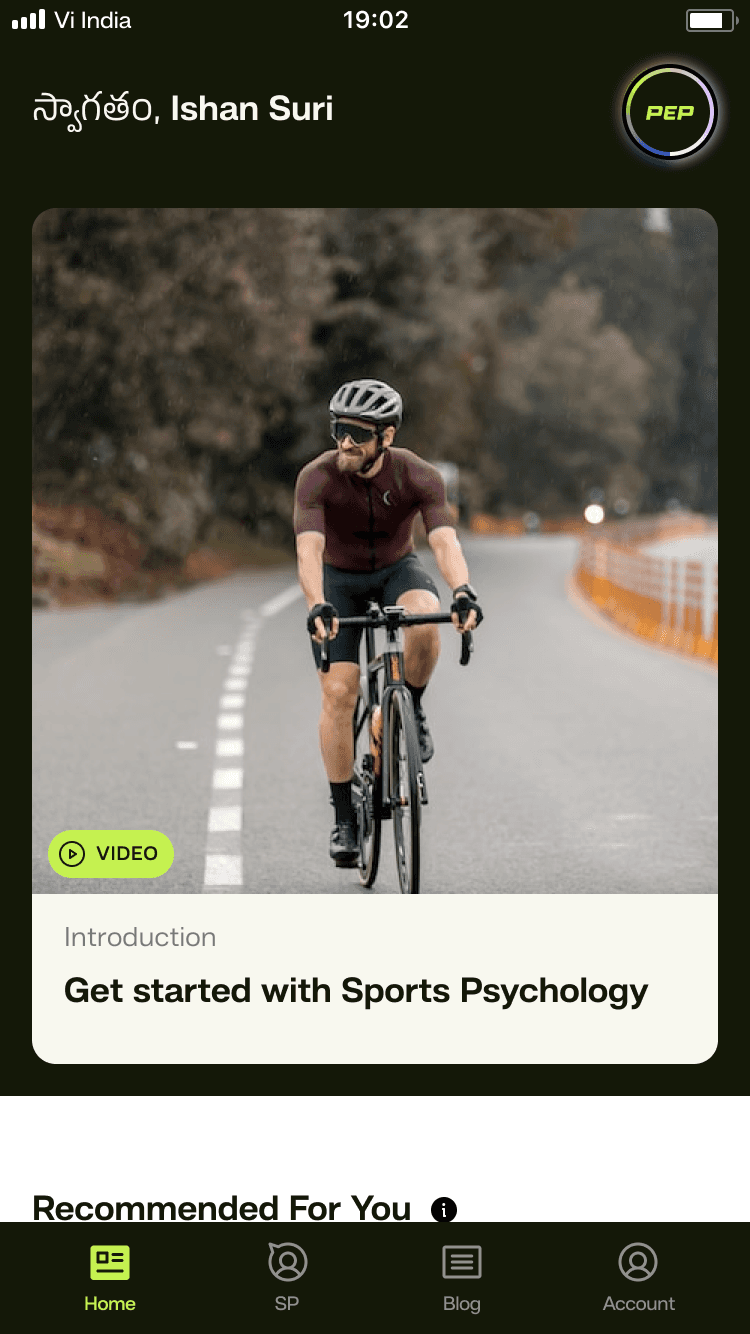
Ask for a language at first launch, then four quick steps: name, location, sport and level. Home then greets the athlete in their language and recommends content.
Why it fits
The first content feels relevant to a district basketball player or a state archer, not generic wellness advice.
English and several Indian languages.
Sport chosen from icons, not a text list.
Experience and competition level.
A greeting in the chosen language.
Decision 03
Matched, not searched, with the next step always visible
Problem
Athletes struggled to find psychologists they could trust, and many didn’t know where to begin.
Decision
After choosing a plan, athletes answer a 20-statement assessment and get an introduction call with a psychologist the PEP team has matched to them. The dashboard tracks each stage: booked, introduction, scheduled, consulted.
Why it fits
Nobody has to judge a list of strangers, and the next step is always spelled out, down to the sessions left on the plan.

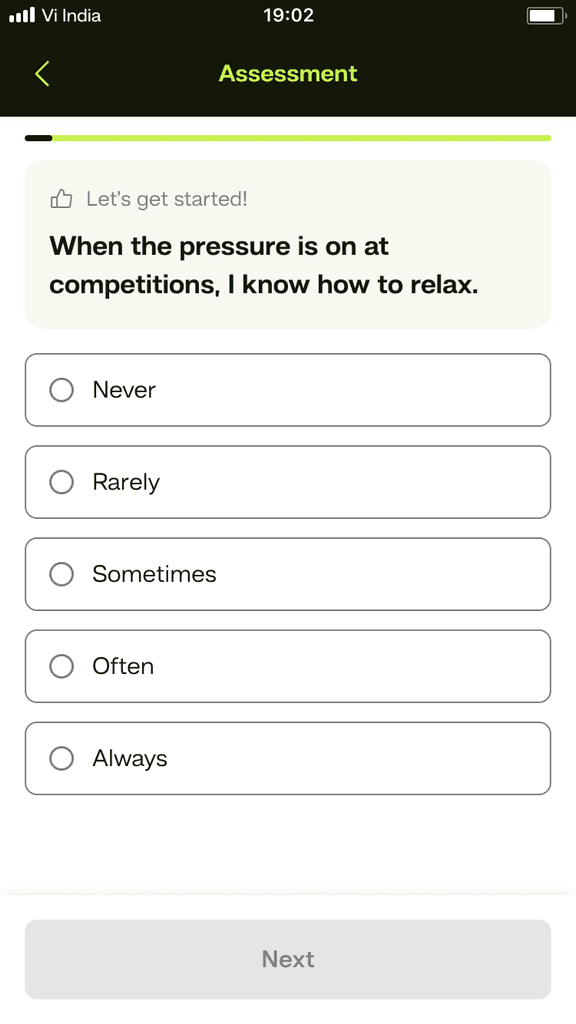
Assessment intro
20 statements, Never to Always
Assessment intro
20 statements, Never to Always


Booked: the PEP team calls within 24 hours.
The assessment is the next step, on the same card.
Matched: “We’ve found the best Sport Psychologist for you.”
Scheduled: date, time and the psychologist.
Consulted: sessions left and days remaining.
Decision 04
Look like sport, not like a clinic
Problem
Mental-health tools can feel clinical, while athletes spend their days around bold sports brands that signal a winning mindset.
Decision
A bold but minimal identity: an italic PEP wordmark, an ink and lime palette with lavender and blue, plus athletic illustrations. Four onboarding treatments were explored before the final.
Why it fits
The project’s own goal was striking and dynamic, but clean and not distracting. The palette work recorded contrast ratios against WCAG AA.

Exploration v1

Exploration v2

Exploration v3

Exploration v4
Final
Four onboarding illustration treatments, ending with the final explainer.
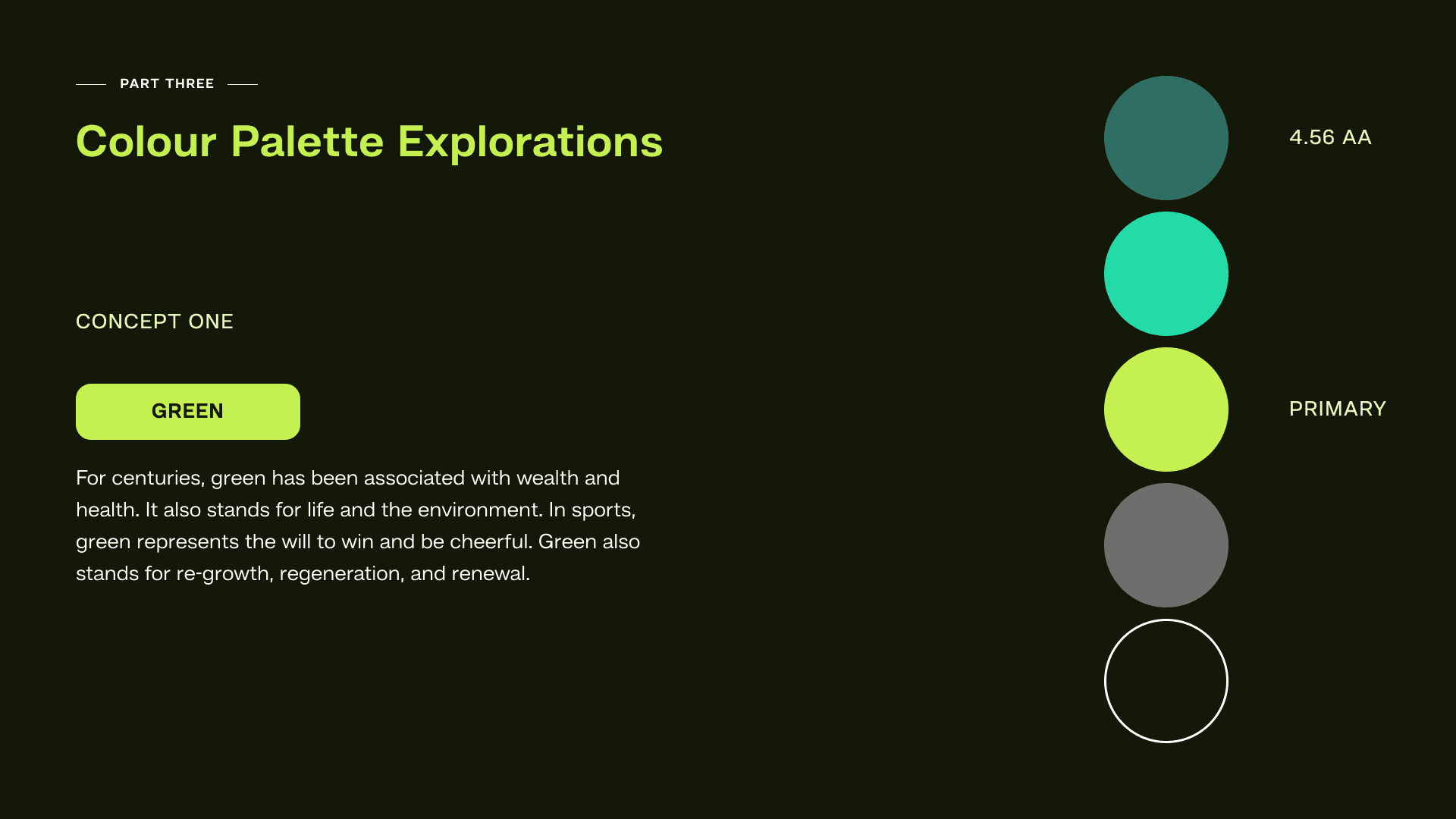
Colour exploration: the green concept, with a contrast note.
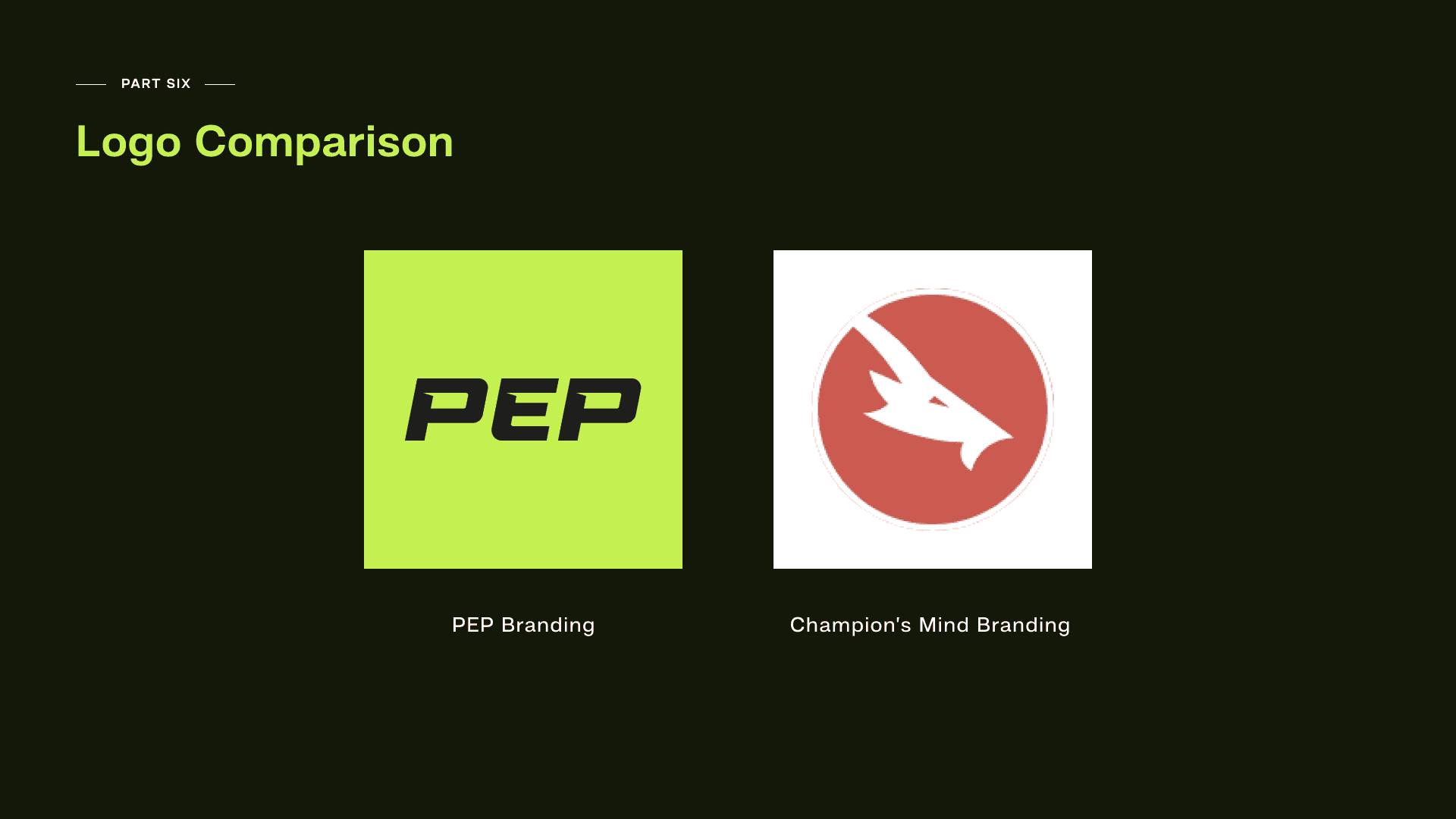
Logo comparison: PEP beside a competitor’s branding.
05
The final experience
Learn, check in, book and keep going.
A selection from the final designs for after onboarding and booking: the everyday content experience, plus the plans and history that support ongoing sessions.

Home: up next and last viewed

Video with captions

Audio with playback speed

A quick check after content
Everyday use: home, video, audio and a quick check after each piece.
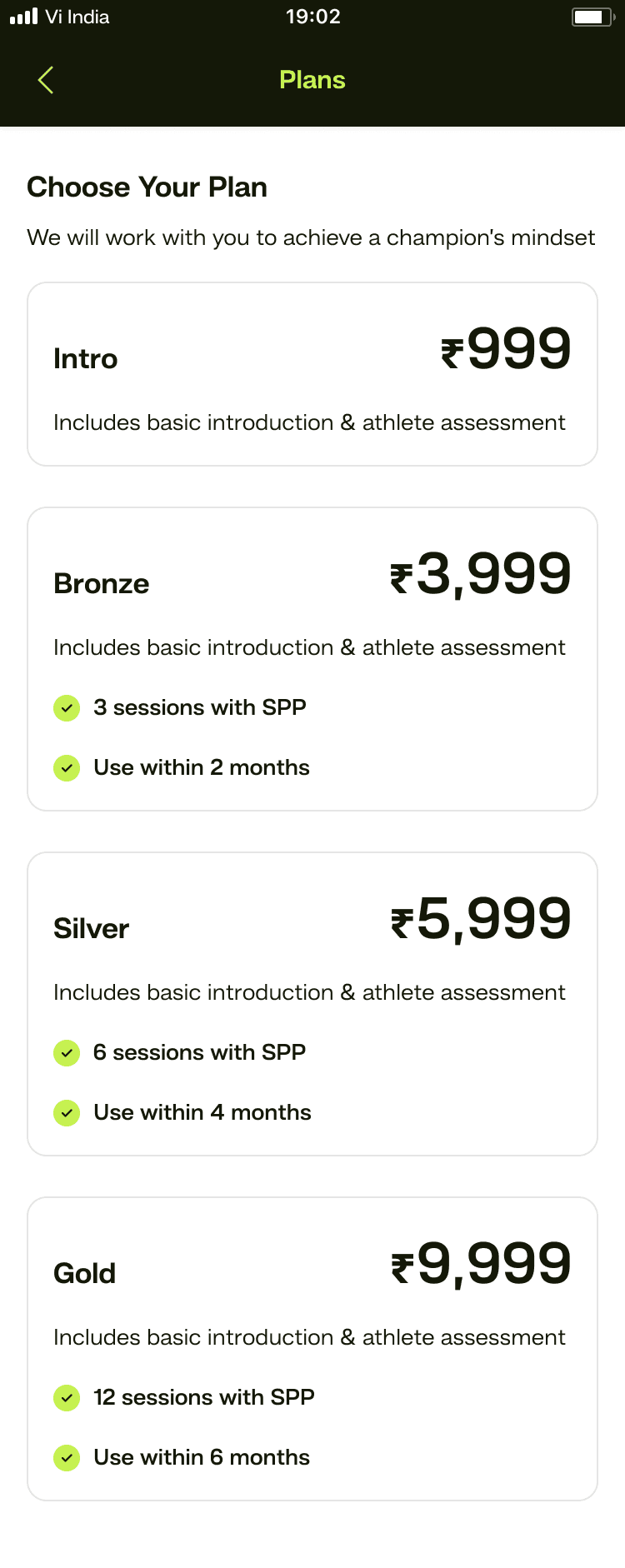
From an intro call to 12 sessions

Checkout with coupon codes
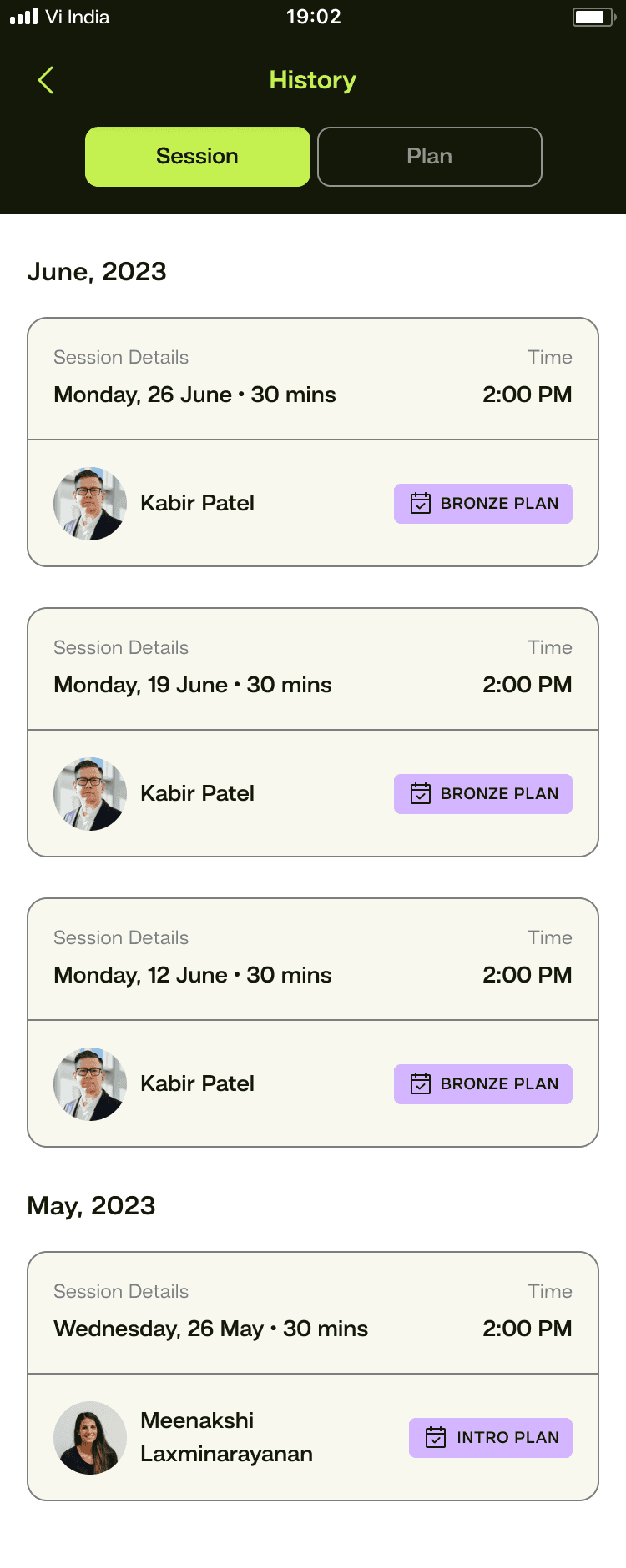
Session history by psychologist

Downloads for offline viewing
Plans, checkout and history for athletes who keep going.
06
Outcomes
Designed, field-tested and handed over.
Delivered
Final mobile designs across 23 flow sections: language and onboarding, home and content, video and audio players, assessment, booking states, plans and checkout, history, profile and settings. A brand identity: wordmark, palette, typography and illustration style, plus a splash animation.
Where it stands
Still in development with another studio. The project deck calls the design field trials a success, especially for ease of use, but notes that there is little data from after testing.
Not in the final designs
Community, live chat and progress tracking were in the requirements but don’t appear in the final designs. Sports-psychologist stories are marked “on hold”.
Results to confirm
My earlier case study quoted 92%, 30% and 76% from field trials. I’ve left those figures out until I can confirm the sample and method.
07
Reflection
Designing for mental health in sport was mostly about tone: earn trust first, then ask.
What I learned
When a product asks for something personal, order matters: explain it, let people try it, then ask them to commit.
A constraint that shaped it
Handing over to another studio meant the designs had to carry every state, from coupon errors to empty histories, without me in the room.
What I’d validate next
How many athletes book after trying content, and how well the assessment-to-match step works once real users arrive.